

Skip to story
อ่านเป็นภาษาไทย
Mae Nak as a ghost, close and centred, holding her swaddled baby on a misty pier at night, pale face lit softly, a sad gentle half-smile, full moon behind her.

Thai Ghost Story · 2 min read

Mae Nak

แม่นาคพระโขนง

Mak came home from service to find Nak and their baby waiting on the pier. No one dared tell him they had died — until a lime fell through the kitchen floor.

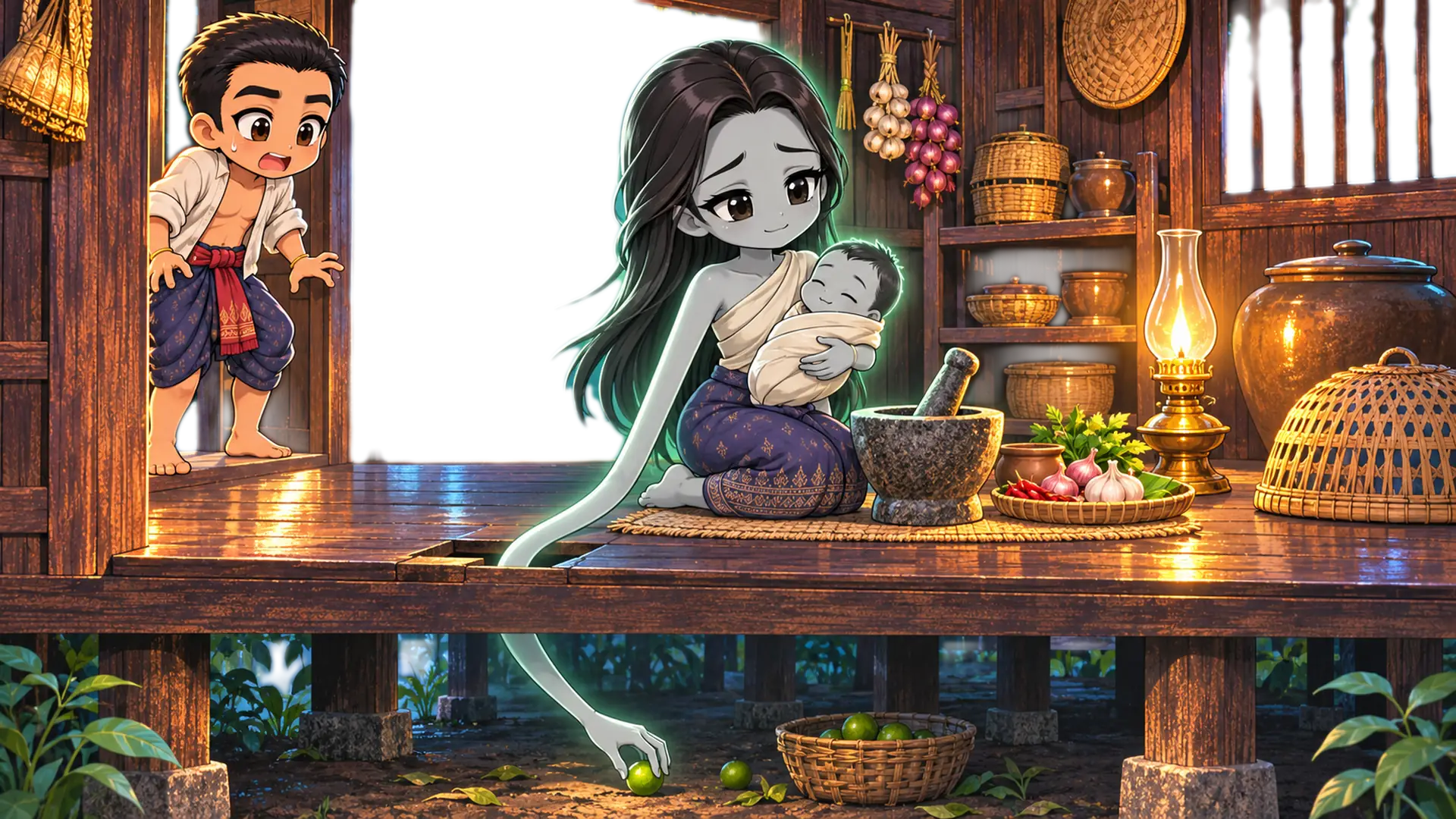
Night, inside a simple wooden stilt-house kitchen lit by an oil lamp: Mae Nak as a ghost, kneeling at a stone mortar, her arm stretching impossibly long and thin down through a gap in the floorboards to pick up a small green lime that fell under the house; in the doorway Mak frozen in shock, eyes huge;, no blood.

Chapter

The Lime

A husband watches his wife cooking dinner. A lime slips from her hand and rolls through a gap in the floor. And her arm… keeps… reaching.

Night on a misty wooden pier by a canal: Mae Nak as a ghost, standing gently with her swaddled baby in her arms, faint pale glow around her, long hair moving in the breeze, a full moon behind the mist, sad and beautiful.

This is Mae Nak — the most famous ghost in Thailand. But before she was a ghost, she was a wife. And this is her love story.


Daytime establishing shot of a 19th-century Siamese canal village: teak stilt houses along a calm canal, wooden piers, small rowboats, banana groves and coconut palms, a village temple roof in the distance, peaceful; no main characters, only tiny distant villagers.

Chapter

Nak and Mak

In the 1800s, outside old Bangkok, there was a village called Phra Khanong — wooden houses on stilts, along a quiet canal.

Inside a cosy wooden stilt house in warm afternoon light: Mak and Mae Nak sitting close and laughing together, her hand on her pregnant belly, a basket of fruit, very much in love.

There lived a young couple, Nak and Mak. They were deeply in love — and Nak was expecting their first child.

A wooden pier at dawn: Mak with a small cloth bundle over his shoulder stepping into an official's long boat with other young village men, turning to wave goodbye; Mae Nak heavily pregnant on the pier, holding back tears.

Then Mak was called away to serve, far from home. He promised to come back before the baby was born.

Sunset on the canal: Mae Nak, heavily pregnant, sitting alone at the end of the pier, watching the empty canal for a boat, lonely, golden-pink sky reflected in the water.

Nak waited. Every evening, she sat at the end of the pier and watched the canal for his boat.

A stormy night: a lonely wooden stilt house by the canal in heavy rain and lightning, one window glowing with candlelight, banana leaves thrashing in the wind, ominous; no characters visible.

Chapter

The Stormy Night

But the birth was hard. On a stormy night, far from her husband, Nak and her baby did not survive.
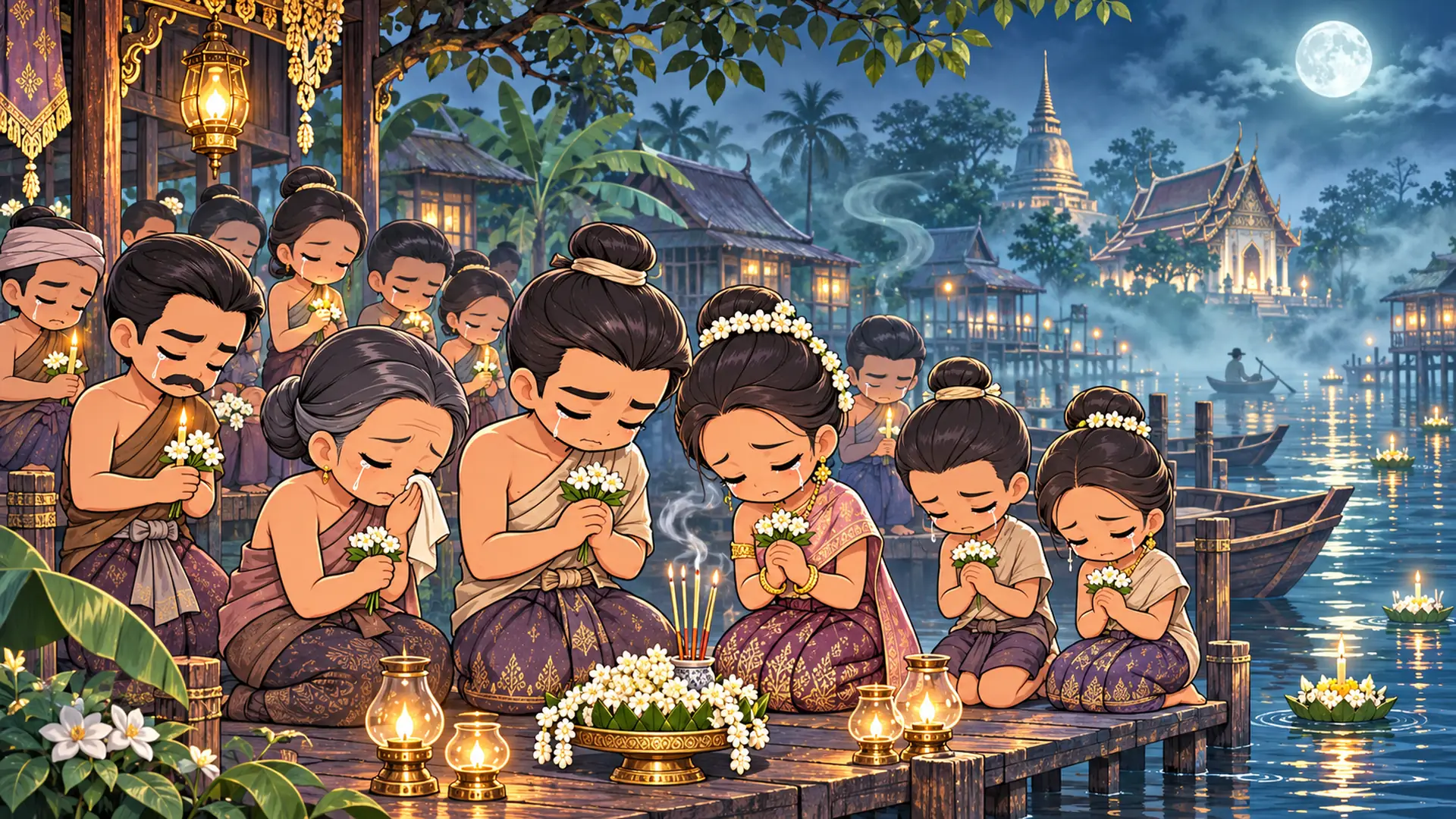
Dusk near the village temple: villagers in simple 19th-century clothes holding white flowers and candles, heads bowed in grief by the canal, incense smoke, mist, sorrowful.

The village buried them near the temple and mourned. And in Thai belief, a woman who dies in childbirth becomes one of the most powerful spirits of all.


Dusk, the canal in mist: Mak rowing home in a small boat, smiling with joy, and on the pier ahead Mae Nak as a ghost waiting with their swaddled baby, smiling sweetly, with a very faint unnatural pale glow that Mak does not notice.

Chapter

The Homecoming

Months later, Mak finally rowed home. And there she was, waiting on the pier — with their baby in her arms.

Inside the stilt house at night, oil-lamp light: Mak happily eating dinner on the floor mat, Mae Nak as a ghost serving him rice with a gentle smile, the baby asleep in a hanging cradle; on the wall behind her, her shadow looks strange and too long — a subtle eerie detail.

No one had told him. And so, for a while, the little family was happy again.
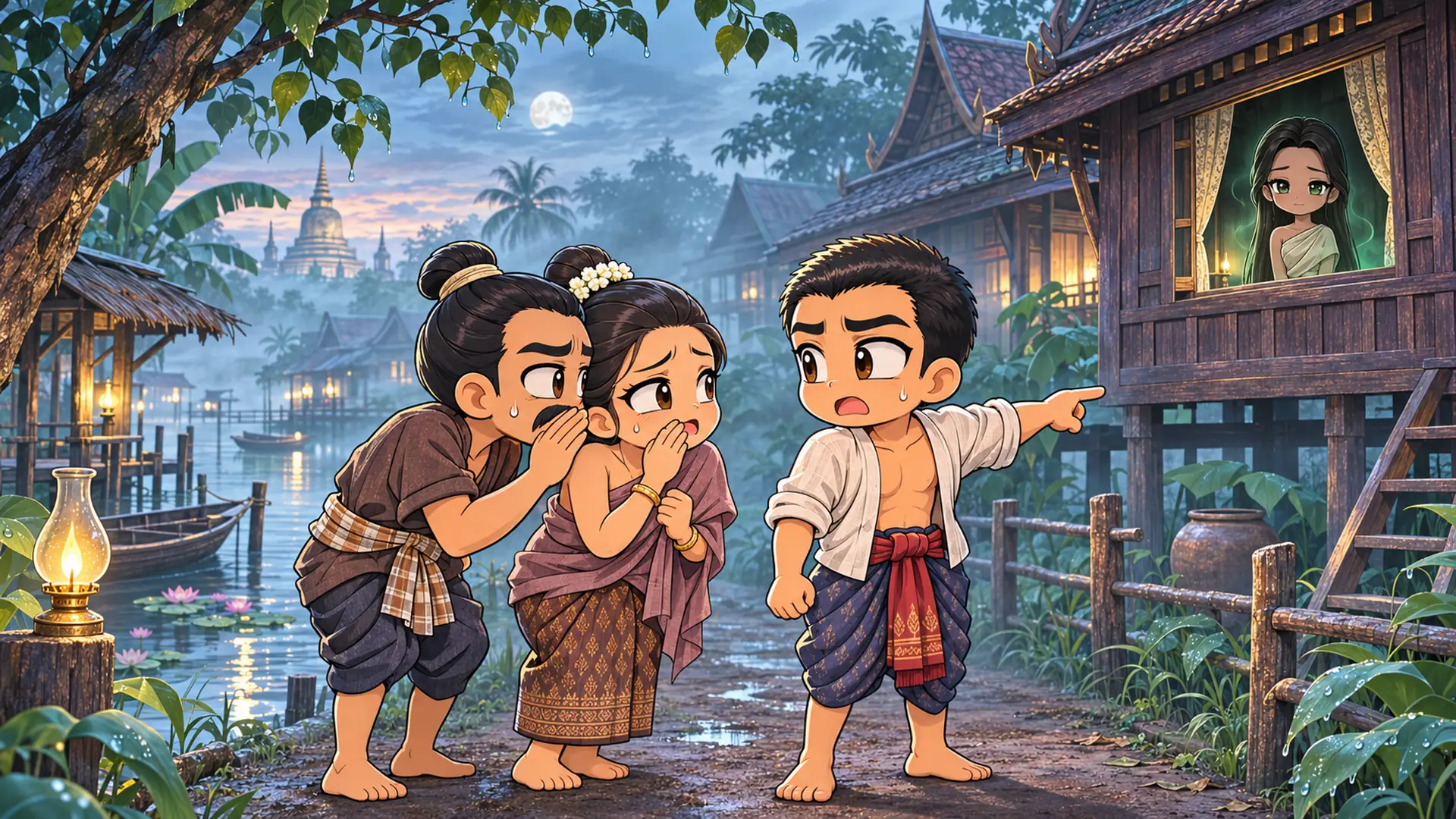
A village path by the canal in the morning: two frightened villagers whispering a warning to Mak, eyes wide, pointing back toward his house; far behind them, in the window of the stilt house, the small figure of Mae Nak watching them coldly with faintly glowing eyes.

The neighbours tried to warn him. But whoever spoke of it soon wished they hadn’t. Strange things found them in the night.


Night, the stilt-house kitchen by oil-lamp light: Mae Nak as a ghost kneeling at a stone mortar pounding chilli paste, a small green lime rolling off the mat toward a gap in the wooden floorboards, quiet and ominous.

Chapter

Her Arm Kept Reaching

One evening, Nak was pounding chilli paste in the kitchen. A lime slipped from her hand and fell through a gap in the floor.

Mak watched her arm stretch — longer, and longer — down through the floor, to pick it up.

Close-up of Mak at the kitchen doorway at night, pale and sweating, forcing a stiff smile, pretending he saw nothing, eyes full of terror, oil-lamp light.

He said nothing. He smiled. But now he knew. His wife was a ghost.

Night in a misty banana grove: Mak running in panic and hiding behind a thick bush with sticky leaves, holding his breath; behind him in the mist, the pale glowing figure of Mae Nak as a ghost searching, hair floating.

Chapter

The Flight

That night, he made an excuse to step outside — and ran. He hid behind a bush with sticky leaves, a plant the villagers said ghosts can’t stand.

Night at the gate of a village temple: Mak safe inside the temple grounds, kneeling and shaking; at the edge of the temple wall Mae Nak as a ghost, unable to cross, crying out his name, hair wild, holding the baby, ghostly green glow, heartbreaking.

Then he ran all the way to Wat Mahabut, the village temple. She stood at the edge, calling his name.

The canal village at night: oil lamps blown out, villagers hiding inside their houses peeking through shutters, Mae Nak as a ghost floating above the misty canal with a pale green glow, wind and swirling leaves, no gore.

Heartbroken, and furious with the village that had taken him from her, Nak’s spirit raged. After dark, no one dared to leave their homes.

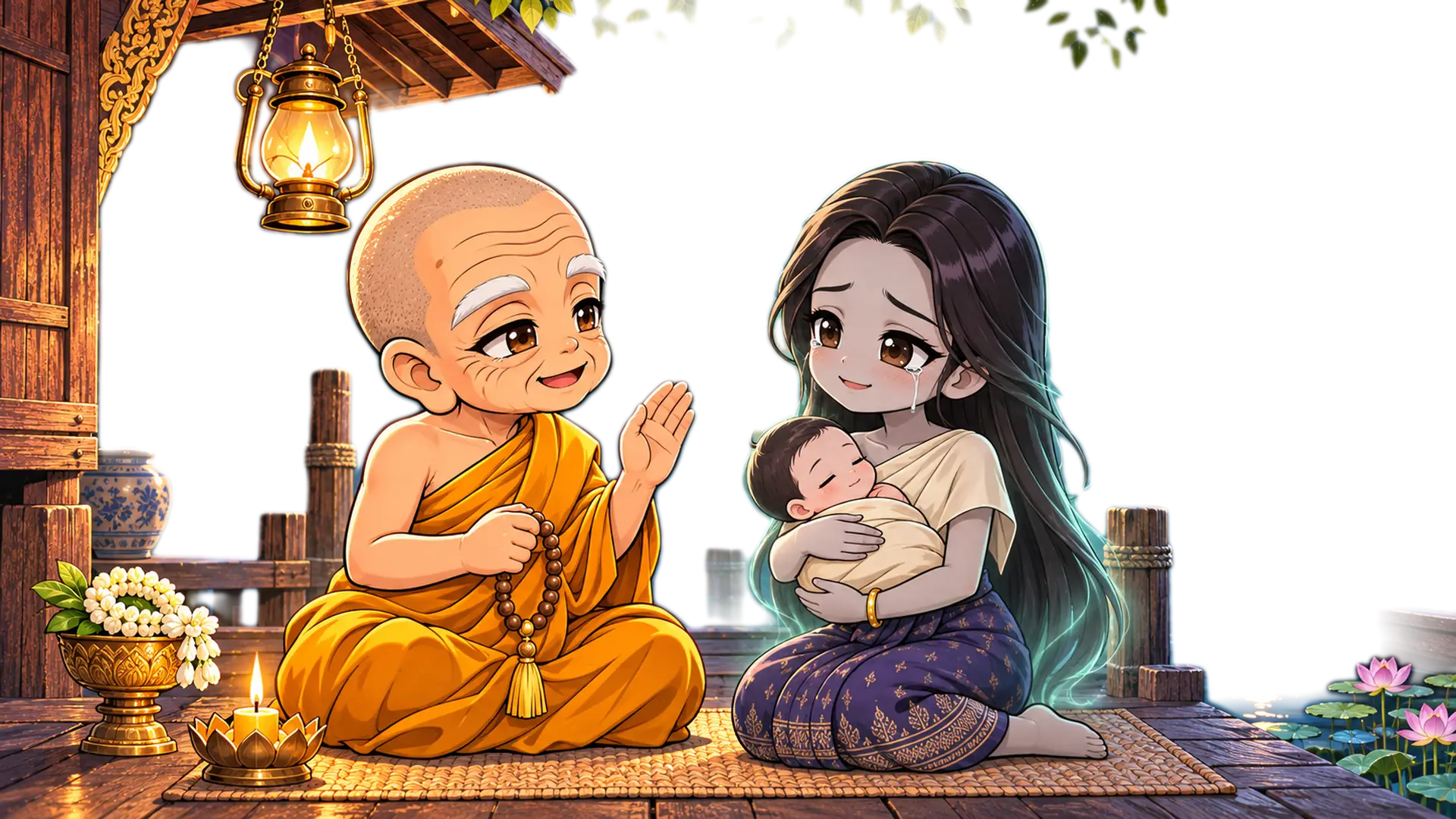
Night by the canal under a lantern: a revered elderly Thai Buddhist monk sitting calmly on a mat facing Mae Nak as a ghost, speaking to her with compassion, his hand raised gently in blessing; she is listening, her anger softening, the baby in her arms; serene and respectful.

Chapter

The Monk

At last, a revered monk came to Phra Khanong. He did not come to fight her. He spoke to her with compassion.

Dawn mist over the canal: Mae Nak as a ghost with her baby, peaceful at last, slowly dissolving into soft golden light; a revered elderly Thai Buddhist monk standing nearby with head bowed respectfully, holding a small glowing amulet; tender and calm.

The tellings differ. In one, he bound her spirit into a small charm and kept it with him; in another, it was sealed in a clay jar beneath the canal. But in every version, the haunting ended — and Nak could rest.

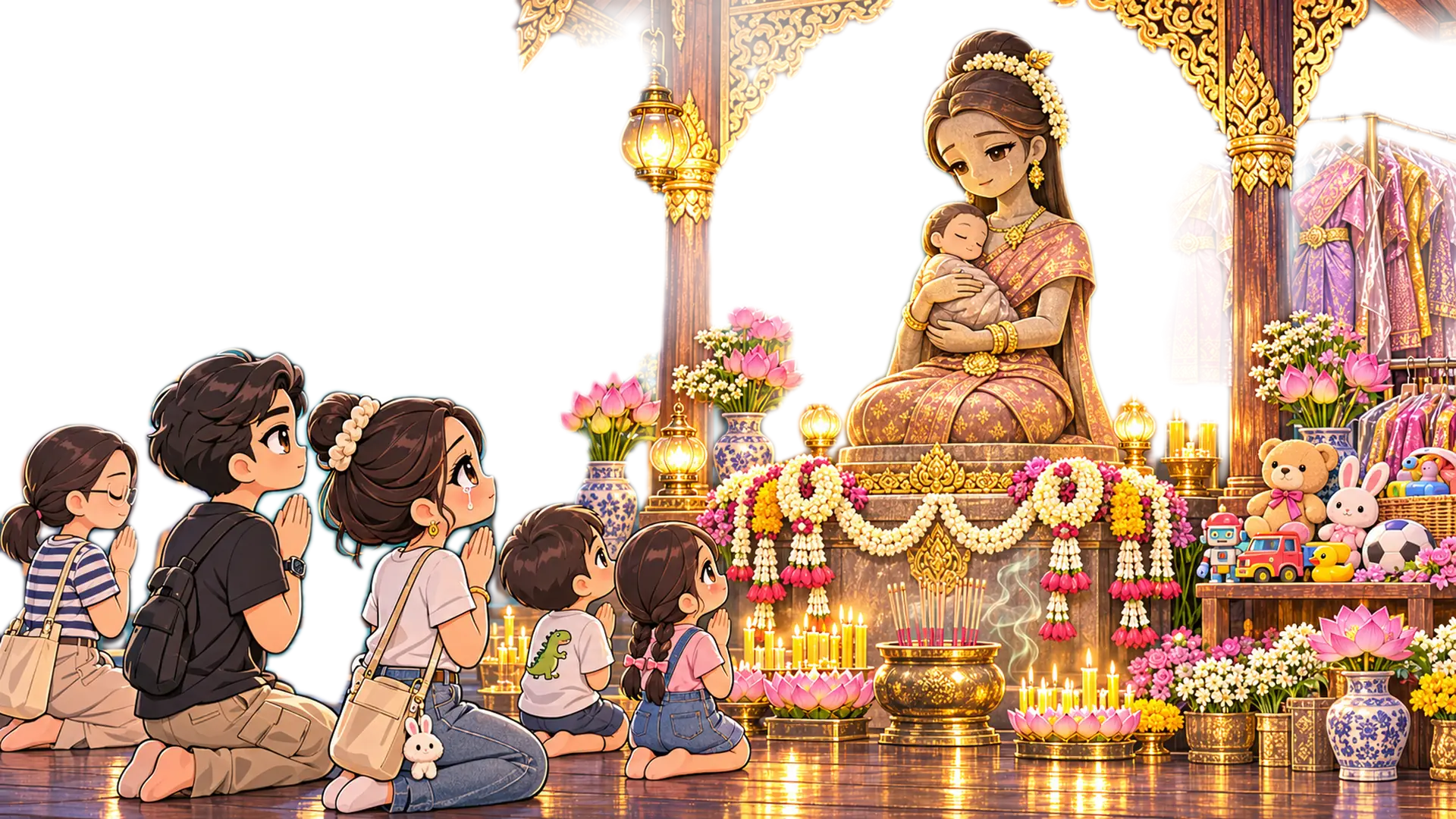
Present-day Bangkok, the Mae Nak shrine at Wat Mahabut: a gentle statue of Mae Nak holding her baby, surrounded by colourful Thai dresses hanging on racks, children's toys, flowers, garlands and incense; present-day visitors in modern clothes praying respectfully; warm and colourful.

Chapter

Mae Nak Today

Today, her shrine still stands at Wat Mahabut in Bangkok — and it is full of gifts. People bring her beautiful dresses and makeup, and toys for her baby. Mothers-to-be ask her for a safe birth. And young men ask her to spare them from the military draft — so they won’t have to leave the one they love, the way Mak once did.

Her story has been told in films, plays and songs. One of them, Pee Mak, became one of the most successful Thai movies ever made.

A ghost, yes. But first, a wife who waited — and a mother who would not let go.